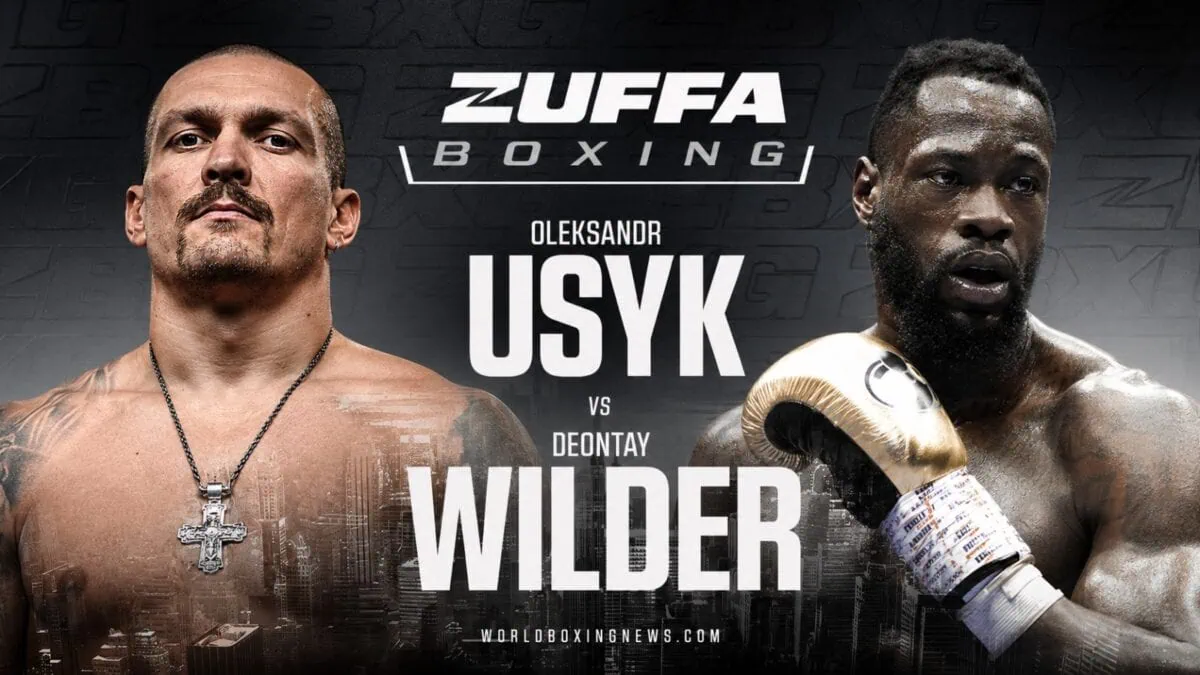
Heavyweight boxing’s lineal championship has endured for over 140 years. Yet, Oleksandr Usyk’s proposed farewell bout against Deontay Wilder could leave this historic crown facing something far more permanent than a temporary vacancy.
From John L. Sullivan through Muhammad Ali, Mike Tyson, Lennox Lewis, Tyson Fury, and Usyk, World Boxing News (WBN) recognizes 40 men who have held the ultimate prize in heavyweight boxing.
The core principle has always been simple: to be the man, you must beat the man.
Usyk, having vacated his sanctioning body belts, wants Wilder for what he describes as his final fight. If Wilder wins, the traditional lineal rule remains intact—he beats the man and takes the crown.
However, if Usyk wins and hangs up his gloves, boxing will be left struggling to rebuild its lineage in an entirely transformed championship era.
Usyk-Wilder: The End of an Era?
WBN recently highlighted how Wilder could improbably cap off his career as the lineal heavyweight champion, despite looking near the end following his brutal 2024 knockout loss to Zhilei Zhang.
The former WBC champion has never held lineal status, despite three attempts against Fury. A victory over Usyk would make Wilder the 41st lineal champion in a lineage dating back to Sullivan in 1885.
One dynamic right hand could make history. A victory for Usyk, however, creates a far more tangled web.
Retirements have severed the lineage before, but the division has always found a way to crown a new true number one.
This time, structural shifts could prevent that.
Zuffa Boxing intends to crown its own heavyweight champion—a title that could even be on the line in Usyk vs. Wilder. They have indicated a willingness to collaborate with existing sanctioning bodies, potentially adding yet another title alongside the WBA, WBC, IBF, and WBO belts.
The influence of The Ring magazine adds further complexity.
Can Boxing Ever Restore a Lineal Champion?
The Ring belt has long been tied to the lineal concept because its champion is generally acknowledged as the division’s supreme fighter.
Usyk’s claim is undisputed: he defeated Anthony Joshua twice, beat Fury twice, and remains undefeated as a professional.
But what happens once he walks away?
What if The Ring title stays under the Zuffa umbrella while an outside fighter unifies the WBA, WBC, IBF, and WBO titles? Who gets recognized as the true heir capable of restoring the lineage?
The lineal championship cannot simply be handed to the person with the most belts. Someone has to establish themselves as “The Man.”
If The Ring and the traditional bodies back two different champions for the foreseeable future, the lineal title as we know it may effectively cease to exist.
A History of Solutions—and an Uncertain Future
Boxing has navigated this maze before.
After Lennox Lewis retired, The Ring crowned Vitali Klitschko following his 2004 victory over Corrie Sanders, launching a new lineage recognized by WBN. Wladimir Klitschko went on to dominate the division until Tyson Fury dethroned him in 2015.
Fury’s victory eventually paved the way for Usyk, who defeated Fury twice in 2024. That lineage now resides with the Ukrainian.
A 140-Year Heritage Facing Extinction
The lineal title requires no sanctioning fees, mandatory challengers, or physical belts. It exists purely through universal recognition.
Not everyone values the concept. Eddie Hearn famously dismissed it during Fury’s peak in 2018:
“The lineal championship doesn’t actually exist. It’s a mythical title that people use when they don’t have any belts.”
While WBN documented Hearn’s take, they continued tracking the lineage. Forty men and 140 years of history back that decision.
The threat today is whether an increasingly fractured sport can ever again unite behind a single champion.
If Wilder wins, the issue is deferred—he takes the lineage forward.
If Usyk wins and retires, competing promotion and sanctioning structures could push the lineal crown beyond vacancy—straight into extinction.
If no consensus can be reached on who brings it back, Hearn’s old argument might finally hold true.
And once it disappears, it begs the ultimate question: did it ever really exist at all?